What is it?
The Rubio Monocoat Oil Plus 2C is a hardwax oil wood finish that bonds to timber. It protects from daily wear, heat and water. Hardwax oil wood finishes are typically manufactured from a mix of vegetable oils and waxes. Examples date back to the 1800’s where Linseed oil was applied to timber to protect it, followed by a beeswax application to enhance the appearance. However, this two-step method required regular maintenance to maintain the appearance and functionality. This lead to the development of the modern hardwax finishes that are popular today.
Where I use it:
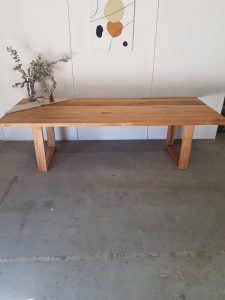
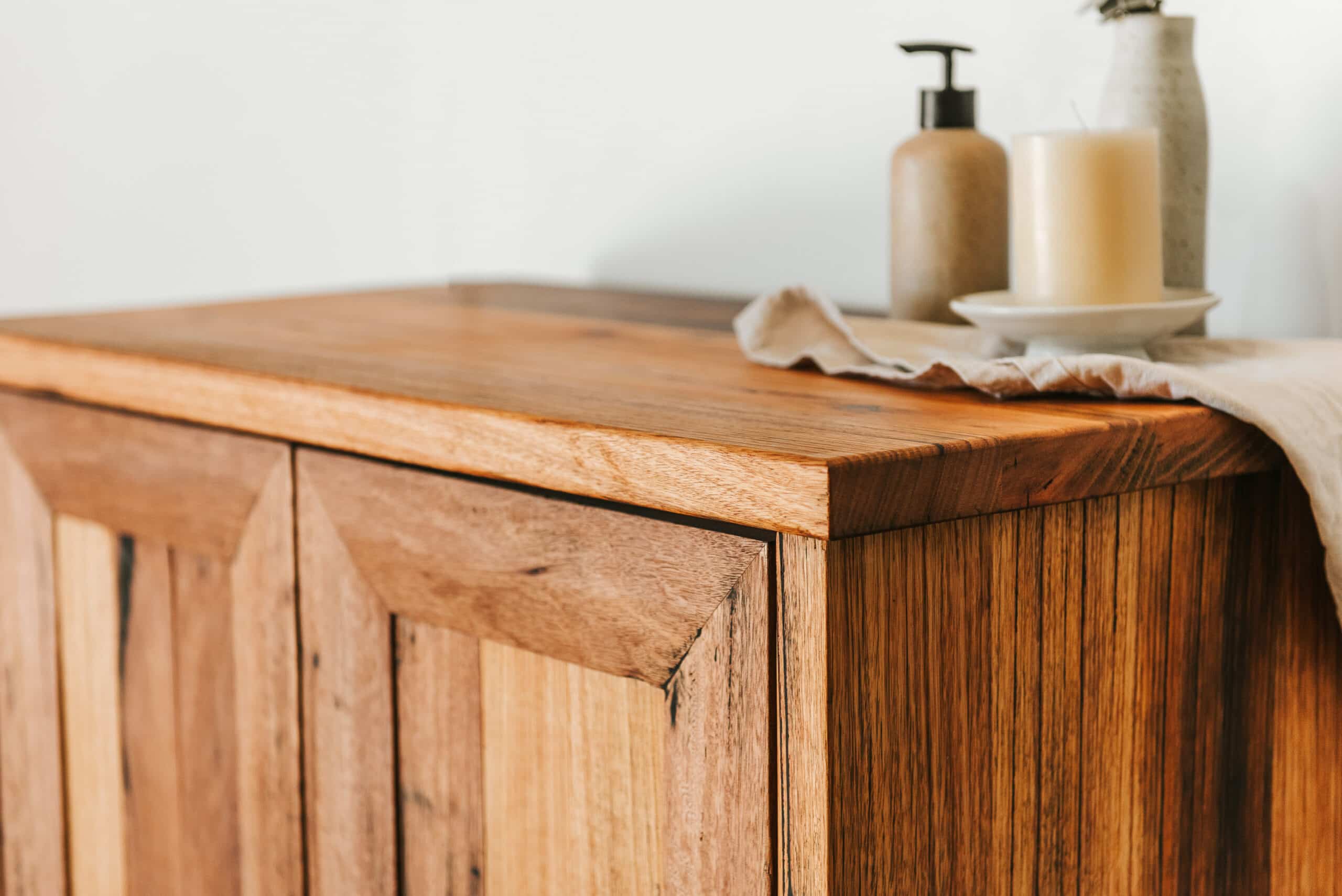
I use it on the majority of my pieces as it produces a lovely matte finish, is easy to maintain, simple to repair and hardwearing. While I wouldn’t recommend drinking the stuff, Rubio Monocoat has a Fit for Food certification from an independent testing institute. It is 0% VOC meaning I can use it with confidence for the pieces I create.
If you’re planning a custom dining table in Australia, working with a maker early allows you to refine ideas, discuss finishes and create something that truly fits your home.
Why I use it:
A great benefit is that Rubio Monocoat is 0% VOC, making it a pleasure to apply unlike some finishes.
Rubio cures quickly and allows the wood grain and texture to really come through, providing a nice natural feel without having a plastic feel commonly caused by some finishes. It’s environmentally friendly and won’t peel or flake over time like a film finish. What’s more, re-application may never be required if the piece is maintained with care. If re-finishing is required it’s typically an easy process (light sanding / re-apply Rubio).
Further lustre can be generated by adding the maintenance oil, if required. They have a massive colour range so if staining is ever something a client is after; there’s no need to compromise on the finish quality.
What’s a VOC – VOCs are a group of carbon-based chemicals that easily evaporate at room temperature. Many household products, such as paints and cleaning products, give off VOCs. Common VOCs include acetone, benzene, ethylene glycol, formaldehyde, methylene chloride and perchloroethylene.
Side effects of VOC’s include irritation of the eyes, nose and throat, difficulty breathing, nausea and damage to the central nervous system. Some VOCs are known to cause cancer. Needless to say, I always select low, or no VOC options where available.
I specialise in custom dining tables, bespoke cabinets, coffee tables and one-off statement pieces. Whether you’re looking for a custom cabinet in Melbourne or a bespoke statement piece elsewhere, we can design, build, and deliver to your location Australia wide.